Buy wasserfall.eu ?
We are moving the project
wasserfall.eu .
Are you interested in purchasing the domain
wasserfall.eu ?
domain@kv-gmbh.de · 0541-91531010
Buy wasserfall.eu ?
How can reducing and non-reducing sugars be detected?
Reducing sugars can be detected using Benedict's test, in which the reducing sugar is heated with Benedict's reagent and a color change from blue to green, yellow, orange, or red indicates the presence of reducing sugars. Non-reducing sugars can be detected by first hydrolyzing them into reducing sugars using acid hydrolysis, and then performing the Benedict's test to detect the presence of reducing sugars. Another method to detect reducing and non-reducing sugars is through chromatography, where the sugars are separated based on their interactions with a stationary phase and a mobile phase, and then visualized using specific detection methods. **
Are halogens reducing agents?
No, halogens are not reducing agents. In chemical reactions, reducing agents are substances that donate electrons to other reactants, causing them to be reduced. Halogens, on the other hand, are highly electronegative elements that tend to gain electrons rather than lose them, making them more likely to act as oxidizing agents. **

Similar search terms for Reducing
Top-Angebote
Products related to Reducing:
-
Uplift Essentials Turmeric Lip Brightening Scrub Natural Exfoliating & Melanin Reducing Lip Care Turmeric Lip Brightening Scrub Natural Exfoliating & Melanin Reducing Lip CareHarness the ancient healing power of golden botanicals with this Turmeric Lip Scrub. Specifically formulated to target discoloration and dullness, this intensive chapped lip care product uses the natural antiinflammatory and brightening properties...37,97 $*Shipping: 0,00 $Secure redirect to the provider
-
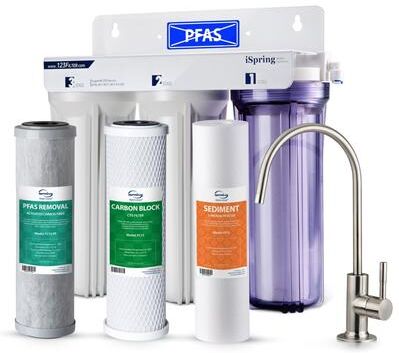
iSpring US31-PF Classic 3-Stage Under Sink Water Filtration System, SGS-Tested PFAS Reducing, Tankless Under Sink Water FilterFeatures: [SGS-Tested PFAS Reduction]: This advanced filter is expertly engineered to target and reduce per- and poly-fluoroalkyl substances (PFAS), a group of persistent and potentially harmful chemicals often present in tap water.170,09 $*Shipping: 0,00 $Secure redirect to the provider
-
"iSpring 2-Stage Iron and Manganese Reducing Whole House Water Filtration System w/ 10"" x 4.5"" Filters, 1"" Ports"[Two-Stage Effective Filtration] Our featured 2nd stage filter (FM15B) is specially designed for iron & manganese removal, reducing iron (Max 3.0 ppm down to 0.01 ppm) and manganese (Max 1.0 ppm down to 0.01 ppm).211,99 $*Shipping: 0,00 $Secure redirect to the provider



-
When is sugar reducing?
Sugar is reducing when it undergoes a chemical reaction that breaks down its molecular structure, resulting in a decrease in its overall concentration. This reduction can occur when sugar is heated, such as when caramelizing sugar to make caramel, or when sugar is fermented by yeast to produce alcohol. Additionally, sugar can also be reduced through enzymatic reactions, where enzymes break down sugar molecules into simpler forms. **
-
What are reducing sugars?
Reducing sugars are a type of sugar that have the ability to reduce other substances, particularly by donating electrons. This is due to the presence of a free aldehyde or ketone group in their chemical structure. Common examples of reducing sugars include glucose, fructose, and maltose. When reducing sugars react with certain compounds, they can cause a color change, such as in the Benedict's test for detecting the presence of reducing sugars. **
-
What does reducing mean?
Reducing means to make something smaller, decrease in size, quantity, or intensity. It can also refer to simplifying or streamlining a process or system. In mathematics, reducing involves simplifying a fraction or expression to its simplest form. Overall, reducing involves minimizing or decreasing something to a more manageable or efficient state. **
-
What is the C4 plant strategy for reducing water loss?
C4 plants have evolved a strategy to reduce water loss by minimizing the opening of their stomata during hot and dry conditions. They achieve this by using a specialized carbon fixation pathway that allows them to concentrate carbon dioxide in specific cells, reducing the need to keep their stomata open for extended periods. This concentration of carbon dioxide allows C4 plants to perform photosynthesis more efficiently and with less water loss compared to C3 plants. Additionally, C4 plants are able to carry out photosynthesis at higher temperatures, further reducing water loss by minimizing the time their stomata need to be open. **

Is sucrose a reducing sugar?
Sucrose is not a reducing sugar because it does not have a free aldehyde or ketone group that can participate in the reduction reaction. Sucrose is a disaccharide composed of glucose and fructose linked together by a glycosidic bond, which prevents it from being able to undergo the typical reactions of reducing sugars. **
What is a reducing effect?
A reducing effect refers to the ability of a substance to donate electrons or hydrogen atoms to another substance, thereby causing a reduction reaction. This process results in the reduction of the other substance, which gains electrons or hydrogen atoms. Substances with reducing effects are often referred to as reducing agents and play a crucial role in various chemical reactions, including redox reactions. **
Top-Angebote
Products related to Reducing:
-
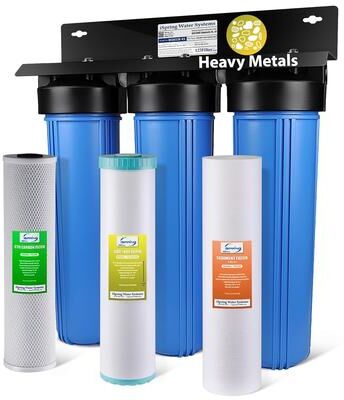
iSpring 3-Stage Heavy Metal Reducing Whole House Water Filtration"[Protect Your Family and Household Appliance from Chlorine, Heavy Metal, and Other Harmful Chemicals] Our 2nd stage FG25B-KS 20"" x 4.5"" compound filter is specially designed to remove chlorine, lead, mercury, hydrogen sulfide, heavy metals,..."448,48 $*Shipping: 0,00 $Secure redirect to the provider
-
"iSpring Iron and Manganese Reducing Water Filter, Replacement Cartridge for WGB21BM, 10""x 4.5"""iSpring FM15B is specially designed for iron & manganese removal, reducing iron (Max 3.0 ppm down to 0.01 ppm) and manganese (Max 1.0 ppm down to 0.01 ppm).56,69 $*Shipping: 0,00 $Secure redirect to the provider
-
Uplift Essentials Turmeric Lip Brightening Scrub Natural Exfoliating & Melanin Reducing Lip Care Turmeric Lip Brightening Scrub Natural Exfoliating & Melanin Reducing Lip CareHarness the ancient healing power of golden botanicals with this Turmeric Lip Scrub. Specifically formulated to target discoloration and dullness, this intensive chapped lip care product uses the natural antiinflammatory and brightening properties...37,97 $*Shipping: 0,00 $Secure redirect to the provider
-
How can reducing and non-reducing sugars be detected?
Reducing sugars can be detected using Benedict's test, in which the reducing sugar is heated with Benedict's reagent and a color change from blue to green, yellow, orange, or red indicates the presence of reducing sugars. Non-reducing sugars can be detected by first hydrolyzing them into reducing sugars using acid hydrolysis, and then performing the Benedict's test to detect the presence of reducing sugars. Another method to detect reducing and non-reducing sugars is through chromatography, where the sugars are separated based on their interactions with a stationary phase and a mobile phase, and then visualized using specific detection methods. **
-
Are halogens reducing agents?
No, halogens are not reducing agents. In chemical reactions, reducing agents are substances that donate electrons to other reactants, causing them to be reduced. Halogens, on the other hand, are highly electronegative elements that tend to gain electrons rather than lose them, making them more likely to act as oxidizing agents. **
-
When is sugar reducing?
Sugar is reducing when it undergoes a chemical reaction that breaks down its molecular structure, resulting in a decrease in its overall concentration. This reduction can occur when sugar is heated, such as when caramelizing sugar to make caramel, or when sugar is fermented by yeast to produce alcohol. Additionally, sugar can also be reduced through enzymatic reactions, where enzymes break down sugar molecules into simpler forms. **
-
What are reducing sugars?
Reducing sugars are a type of sugar that have the ability to reduce other substances, particularly by donating electrons. This is due to the presence of a free aldehyde or ketone group in their chemical structure. Common examples of reducing sugars include glucose, fructose, and maltose. When reducing sugars react with certain compounds, they can cause a color change, such as in the Benedict's test for detecting the presence of reducing sugars. **
Similar search terms for Reducing
-
iSpring US31-PF Classic 3-Stage Under Sink Water Filtration System, SGS-Tested PFAS Reducing, Tankless Under Sink Water FilterFeatures: [SGS-Tested PFAS Reduction]: This advanced filter is expertly engineered to target and reduce per- and poly-fluoroalkyl substances (PFAS), a group of persistent and potentially harmful chemicals often present in tap water.170,09 $*Shipping: 0,00 $Secure redirect to the provider
-
"iSpring 2-Stage Iron and Manganese Reducing Whole House Water Filtration System w/ 10"" x 4.5"" Filters, 1"" Ports"[Two-Stage Effective Filtration] Our featured 2nd stage filter (FM15B) is specially designed for iron & manganese removal, reducing iron (Max 3.0 ppm down to 0.01 ppm) and manganese (Max 1.0 ppm down to 0.01 ppm).211,99 $*Shipping: 0,00 $Secure redirect to the provider
-
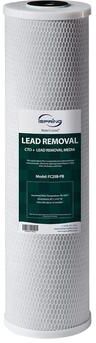
iSpring FC25B-PB 4.5” x 20” Lead, Arsenic, Cadmium, Chlorine Reducing Whole House Water Filter, SGS-Tested, Fits WGB32B SeriesSGS-Tested Lead Removal: The media of FC25B-PB filter is rigorously tested by SGS, effectively removing up to 99% of lead from your water, ensuring safer drinking water for your household.153,65 $*Shipping: 0,00 $Secure redirect to the provider
-
iSpring WGB22B-PF Whole House Water Filter System Removes Chlorine, Sediment, Rust, Odor, SGS-Tested Reducing up to 99% of PFASAdvanced PFAS Filtration: Equipped with an upgraded PFAS water filter (FC25B-PF) in stage two, this SGS-tested filter media effectively reduces up to 99% of PFAS, including PFOA and PFOS Comprehensive Sediment Protection: The stage one sediment...593,99 $*Shipping: 0,00 $Secure redirect to the provider
-
What does reducing mean?
Reducing means to make something smaller, decrease in size, quantity, or intensity. It can also refer to simplifying or streamlining a process or system. In mathematics, reducing involves simplifying a fraction or expression to its simplest form. Overall, reducing involves minimizing or decreasing something to a more manageable or efficient state. **
-
What is the C4 plant strategy for reducing water loss?
C4 plants have evolved a strategy to reduce water loss by minimizing the opening of their stomata during hot and dry conditions. They achieve this by using a specialized carbon fixation pathway that allows them to concentrate carbon dioxide in specific cells, reducing the need to keep their stomata open for extended periods. This concentration of carbon dioxide allows C4 plants to perform photosynthesis more efficiently and with less water loss compared to C3 plants. Additionally, C4 plants are able to carry out photosynthesis at higher temperatures, further reducing water loss by minimizing the time their stomata need to be open. **
-
Is sucrose a reducing sugar?
Sucrose is not a reducing sugar because it does not have a free aldehyde or ketone group that can participate in the reduction reaction. Sucrose is a disaccharide composed of glucose and fructose linked together by a glycosidic bond, which prevents it from being able to undergo the typical reactions of reducing sugars. **
-
What is a reducing effect?
A reducing effect refers to the ability of a substance to donate electrons or hydrogen atoms to another substance, thereby causing a reduction reaction. This process results in the reduction of the other substance, which gains electrons or hydrogen atoms. Substances with reducing effects are often referred to as reducing agents and play a crucial role in various chemical reactions, including redox reactions. **
* All prices are inclusive of VAT and, if applicable, plus shipping costs. The offer information is based on the details provided by the respective shop and is updated through automated processes. Real-time updates do not occur, so deviations can occur in individual cases. ** Note: Parts of this content were created by AI.